
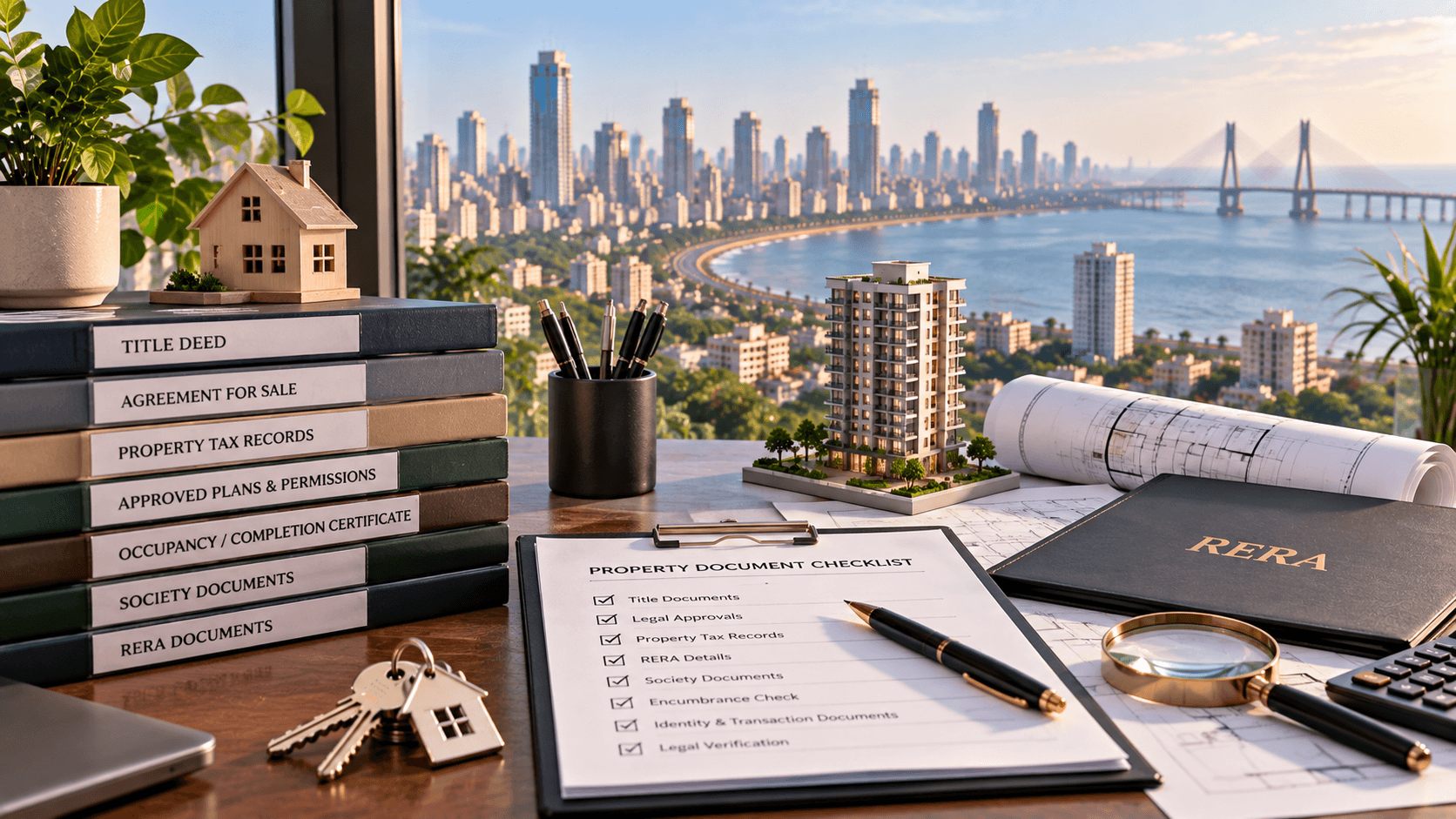
Buying a property involves much more than selecting a location and negotiating the price.
Property documentation plays an important role in understanding ownership, approvals and the transaction itself.
The exact documents required can vary depending on the property, transaction and project. Buyers should consider professional legal advice for document verification.
1. Title Documents
Title-related documents help establish the ownership history and rights associated with the property.
A proper review can help identify potential ownership issues before proceeding with a transaction.
2. Sale Agreement / Agreement for Sale
The agreement sets out important terms between the parties.
It may cover:
- Property details
- Purchase price
- Payment schedule
- Possession
- Responsibilities of the parties
- Other transaction terms
Read the agreement carefully before signing.
3. Property Tax Records
Property tax records can help establish whether applicable property taxes have been paid and whether there are outstanding dues.
Ask for the relevant records where applicable.
4. Approved Plans and Permissions
For applicable properties, buyers should check relevant building plans, approvals and permissions.
This can help confirm that the property corresponds with the approved development.
5. Occupancy / Completion Documents
Depending on the property and development, relevant completion or occupancy documentation may be important.
These documents can provide information about the status of the development and its authorized use.
6. Society / Association Documents
For properties in a housing society or similar development, relevant society documentation may need to be reviewed.
This may include information concerning:
- Membership
- Maintenance
- Outstanding dues
- Transfer requirements
- Society-related permissions
7. Encumbrance and Liability Checks
Buyers should consider whether there are existing claims, charges, loans or other liabilities associated with the property.
Professional legal due diligence can help identify issues that may not be obvious from a basic property inspection.
8. RERA Information
For applicable real estate projects, buyers should review the project’s RERA-related information and registration details.
This can help buyers understand the project’s registered information and disclosures.
9. Identity and Transaction Documents
The parties involved in the transaction may need to provide appropriate identity, address and other documentation as required.
The exact requirements can vary depending on the transaction.
10. Get Professional Verification
Property documentation can be complex, particularly for resale properties, older buildings and transactions involving multiple ownership or legal considerations.
A real estate professional can help coordinate the process, while a qualified property lawyer should be consulted for legal verification and advice.
Final Thoughts
Documentation is an essential part of a property transaction. Buyers should avoid relying solely on verbal assurances and should ensure that relevant documents are properly reviewed before committing to a purchase.
A careful documentation process can help make the transaction more organized and reduce the possibility of avoidable issues.
Looking to buy a property in Mumbai?
Mumbai Spaces Realtors can assist you in exploring residential and commercial property opportunities and coordinating the property transaction process.




Join The Discussion